
- Home
- Services
- Locations
Amesbury, MA
Boxford, MA
Chelmsford, MA
Danvers, MA
Dracut, MA
Essex, MA
Georgetown, MA
Groveland, MA
Hamilton, MA
Haverhill, MA
Ipswich, MA
Merrimac, MA
Methuen, MA
Middleton, MA
Newbury, MA
Newburyport, MA
North Andover, MA
North Reading, MA
Peabody, MA
Rowley, MA
Salem, MA
Salisbury, MA
Tewksbury, MA
Topsfield, MA
Topsfield, MA
West Newbury, MA
Atkinson, MA
Derry, NH
East Kingston, NH
Kensington, NH
Kingston, NH
Londonderry, NH
Plaistow, NH
Salem, NH
- Company
- Contact
- Home
- Services
- Locations
Amesbury, MA
Boxford, MA
Chelmsford, MA
Danvers, MA
Dracut, MA
Essex, MA
Georgetown, MA
Groveland, MA
Hamilton, MA
Haverhill, MA
Ipswich, MA
Merrimac, MA
Methuen, MA
Middleton, MA
Newbury, MA
Newburyport, MA
North Andover, MA
North Reading, MA
Peabody, MA
Rowley, MA
Salem, MA
Salisbury, MA
Tewksbury, MA
Topsfield, MA
Topsfield, MA
West Newbury, MA
Atkinson, MA
Derry, NH
East Kingston, NH
Kensington, NH
Kingston, NH
Londonderry, NH
Plaistow, NH
Salem, NH
- Company
- Contact
Commercial Roofing in Haverhill, MA
Haverhill’s commercial buildings are a mix of old mill brick with built-up roofing that’s been patched more times than anyone can count, strip-mall flat roofs from the 1970s and 80s, and newer metal-framed retail boxes out toward Route 125 with single-ply membranes still under their original install. Almost none of it is pitched. That changes what fails, how fast it fails, and what a fix actually looks like.
Flat and Low-Slope Commercial Roofing Services
We install and repair EPDM rubber, TPO, and modified bitumen systems on commercial buildings across Haverhill. Each has a place. EPDM is the workhorse for large open fields and budget-driven jobs, mechanically attached or fully adhered depending on wind exposure. TPO gives you a reflective white membrane that holds up well on buildings with rooftop HVAC traffic and heat-related wear. Modified bitumen, torched or self-adhered, still makes sense on smaller sections, parapet transitions, and mill-building additions where a single-ply roll roof doesn’t fit the geometry.
We also handle tapered insulation systems where ponding water has been a chronic problem, and coating systems for buildings that need to extend the life of an existing membrane rather than tear it off outright. If a full replacement isn’t the right call yet, we’ll say so.
What Haverhill Commercial Roofs Are Up Against
Haverhill’s low-slope building stock has two problems working against it at once. First, a lot of these membranes were installed in the same construction wave, so entire blocks of commercial roofing along Winter Street, downtown, and the industrial parks off Route 97 are aging out together. Fifteen to twenty years is a normal service life for EPDM and older mod-bit systems, and buyers who bought their building rather than built it often don’t know when the roof went on.
Second, this is a river city with a lot of flat-roofed additions tucked behind or beside older pitched-roof structures, exactly the kind of transition point where flashing fails first. Ponding water at drains and scuppers, seam failure at parapet walls, and ice buildup at roof edges in winter are the recurring calls we get here. Add in rooftop-mounted HVAC units that were never properly flashed when they were installed or serviced, and you’ve got a building that leaks at the equipment pad long before the membrane field gives out.
How We Assess It
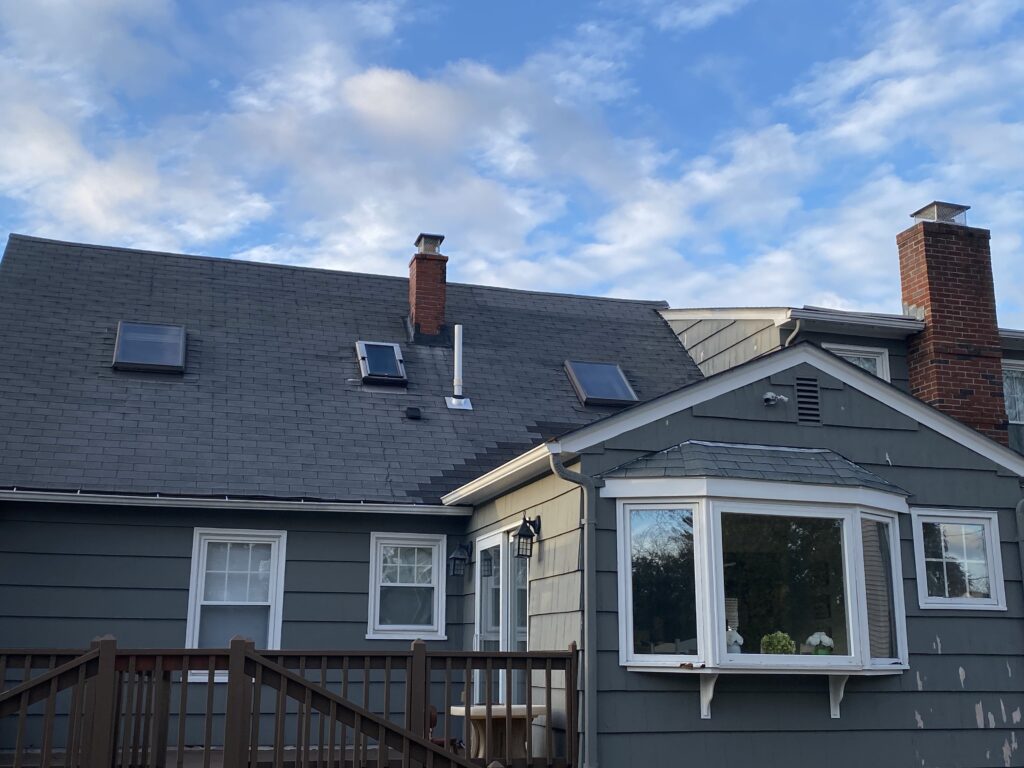
Derek walks the roof before anyone talks numbers. That means checking membrane condition at seams and laps, probing for wet insulation underneath the surface, looking at every penetration – drains, vents, HVAC curbs, conduit runs – and checking parapet flashing and coping caps for separation. Ponding areas get flagged and measured, not guessed at. Inside, if there’s ceiling staining or a finished space below, we’ll look at what’s actually coming through and trace it back to the source, which is often ten or twenty feet from where the water shows up inside.
You get a straight answer about what’s failing, what’s still sound, and whether this is a patch, a partial re-cover, or a full tear-off. We don’t recommend a full replacement to a property owner who needs a section repair and five more years out of a membrane.
What the Job Involves
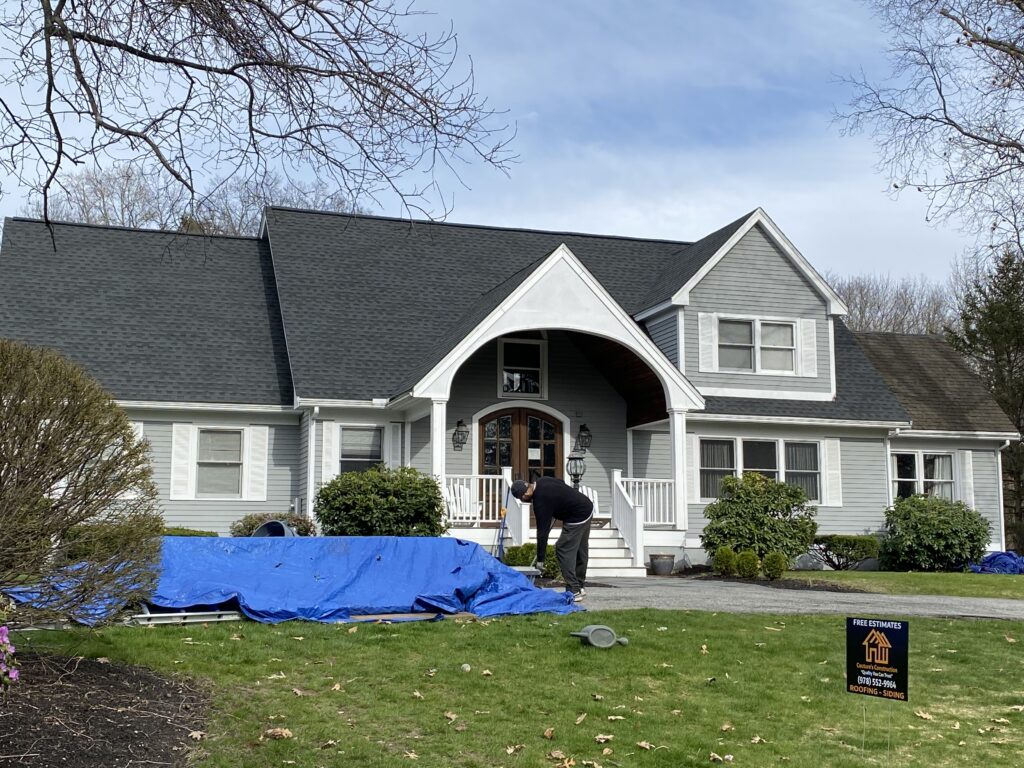
Commercial work here is almost always phased around a business that’s still open. We schedule around loading dock hours, retail traffic, and tenant occupancy, and we section the roof so no more area is opened up than can be closed back in that work day. Material and equipment staging gets planned around parking lot use and any shared access with neighboring units.
The work itself depends on what we found in the assessment: tear-off to decking where the substrate is compromised, insulation replacement where wet, new membrane installed to manufacturer spec with properly heat-welded or adhered seams, new flashing at every penetration and parapet, and drain or scupper work if water isn’t moving off the roof the way it should. We coordinate directly with property managers and, where needed, tenants, so nobody’s guessing what day the noise starts.
What It Costs
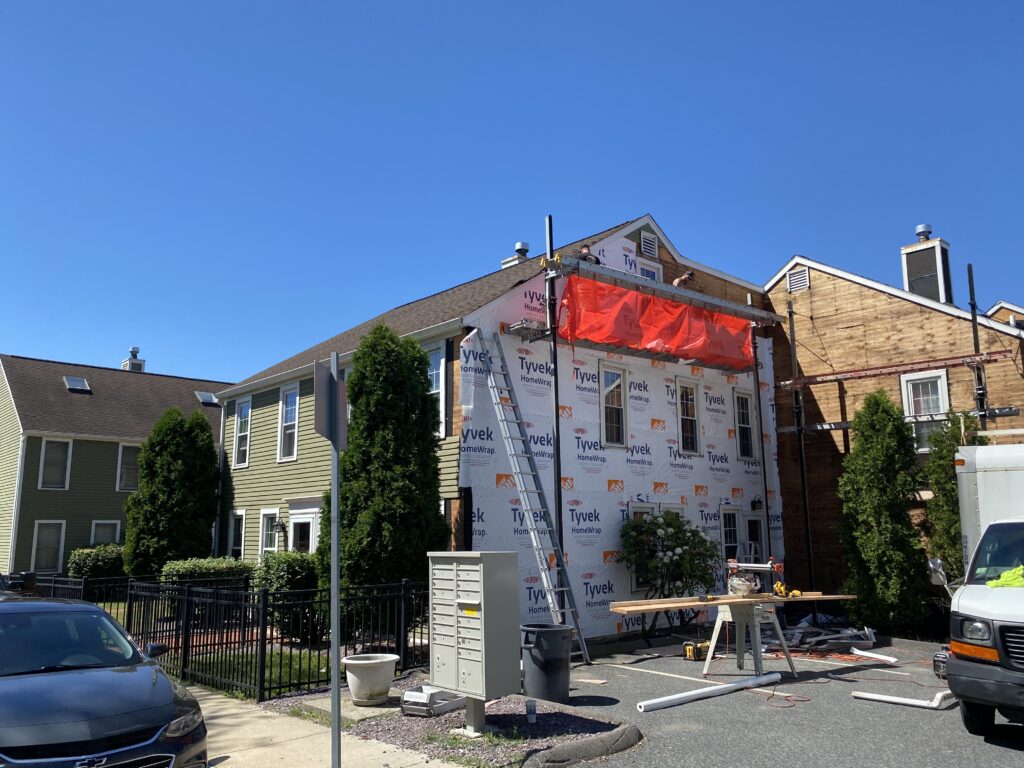
Commercial roofing jobs run from about {PRICE_LOW} to {PRICE_HIGH}, and the spread is wide because commercial roofs vary more than houses do. Square footage is the biggest factor, followed by how many layers need to come off, what condition the decking is in once we’re down to it, how many roof penetrations and HVAC units need new flashing, and whether the building has rooftop access or needs a crane or hoist. A single re-cover on a straightforward field costs a lot less than a tear-off with wet insulation and a dozen curb flashings. We give a number after the walk, not before it.
How Long It Takes
A smaller re-cover or section repair can be done in a day or two. A full tear-off and replacement on a mid-size commercial building typically runs a few days to two weeks depending on square footage, weather, and how the phasing has to work around your operating hours. We’ll give you a schedule before we start and tell you which days involve the most noise and disruption so you can plan around it.
Do you work on occupied commercial buildings, or does the business need to close?
Most commercial roofing happens while the building stays open. We phase the work, section the roof, and schedule around loading docks, business hours, and tenant needs so operations continue underneath us.
How do I know if I need a repair, a re-cover, or a full tear-off?
It comes down to how much wet insulation is under the membrane and how much of the field is still sound. We check that during the assessment before recommending anything, and a re-cover over dry insulation is often a legitimate, less expensive option.
What's the difference between EPDM and TPO for a flat roof?
EPDM is a black rubber membrane, durable and cost-effective for large open fields. TPO is a white, heat-welded single-ply membrane that reflects more heat and holds up well around rooftop equipment. Building layout, budget, and HVAC traffic usually decide which makes sense.
Why does the roof leak at the HVAC units instead of the open field?
Rooftop units get serviced repeatedly over the years and the flashing around the curb often gets disturbed or never properly resealed after equipment swaps. That's a much more common failure point on commercial roofs than the membrane itself.
Get an Estimate
If you manage or own a commercial building in Haverhill and the roof is past its expected life, ponding, or leaking at the flashing, call Couture’s Construction at {PHONE}. We’ll walk the roof, tell you what we see, and give you a straight recommendation, whether that’s a repair, a re-cover, or a full replacement.