
- Home
- Services
- Locations
Amesbury, MA
Boxford, MA
Chelmsford, MA
Danvers, MA
Dracut, MA
Essex, MA
Georgetown, MA
Groveland, MA
Hamilton, MA
Haverhill, MA
Ipswich, MA
Merrimac, MA
Methuen, MA
Middleton, MA
Newbury, MA
Newburyport, MA
North Andover, MA
North Reading, MA
Peabody, MA
Rowley, MA
Salem, MA
Salisbury, MA
Tewksbury, MA
Topsfield, MA
Topsfield, MA
West Newbury, MA
Atkinson, MA
Derry, NH
East Kingston, NH
Kensington, NH
Kingston, NH
Londonderry, NH
Plaistow, NH
Salem, NH
- Company
- Contact
- Home
- Services
- Locations
Amesbury, MA
Boxford, MA
Chelmsford, MA
Danvers, MA
Dracut, MA
Essex, MA
Georgetown, MA
Groveland, MA
Hamilton, MA
Haverhill, MA
Ipswich, MA
Merrimac, MA
Methuen, MA
Middleton, MA
Newbury, MA
Newburyport, MA
North Andover, MA
North Reading, MA
Peabody, MA
Rowley, MA
Salem, MA
Salisbury, MA
Tewksbury, MA
Topsfield, MA
Topsfield, MA
West Newbury, MA
Atkinson, MA
Derry, NH
East Kingston, NH
Kensington, NH
Kingston, NH
Londonderry, NH
Plaistow, NH
Salem, NH
- Company
- Contact
Commercial Roofing in Dracut, MA
Dracut’s commercial buildings are mostly low-slope: strip retail along Bridge Street and Broadway, small office and warehouse space off Route 113, and flat-roofed additions behind older storefronts that were never built for New England snow load. Those roofs don’t fail the way a pitched shingle roof does. They fail at seams, at drains, and at the edges, usually years before anyone notices from the parking lot.
Flat and Low-Slope Commercial Roofing in Dracut
We work in EPDM rubber, TPO membrane, and modified bitumen, the three systems that actually make sense on a low-slope commercial roof in this climate. Which one is right depends on the building, not on what’s cheapest to quote. EPDM is the workhorse for straightforward flat roofs with a lot of field area and few penetrations. TPO gives you a heat-welded seam and a reflective white surface, which matters if you’re trying to manage cooling costs on a building with a lot of roof relative to floor space. Modified bitumen still makes sense on older buildings with a lot of flashing detail already built around it, where a full tear-off to a different system isn’t worth the disruption.
We also handle the tie-ins that get missed on commercial jobs: where a flat roof meets a pitched section, where an old rubber roof was patched over an even older built-up roof, and where rooftop units and vent stacks penetrate the membrane. Those transitions are where commercial roofs actually leak, far more often than the open field.
What Dracut Roofs Are Up Against
Dracut sits in the same weather pattern as the rest of the Merrimack Valley, but the commercial building stock here skews older and more patched-together than the newer retail plazas you’d find closer to 495. A lot of these flat roofs have been recoated or re-membraned once already, sometimes over an existing system that was never removed, which adds weight and complicates any future work. Ponding water is the number one problem we see on Dracut’s flat roofs, usually from a roof that was never pitched correctly to its drains in the first place, or drains that have been slowly clogging with debris from the tree cover along the Merrimack River corridor.
The other issue specific to buildings like these is age clustering. A lot of Dracut’s commercial stock went up or was last re-roofed in the same general window, which means multiple property owners along the same stretch of road are all sitting on membranes that are past their realistic service life at roughly the same time. Add in ice and snow load on a flat roof with poor drainage, and you get the kind of slow leak that shows up as a stain on the ceiling tile months before anyone climbs up to look at the roof itself.
How We Assess It
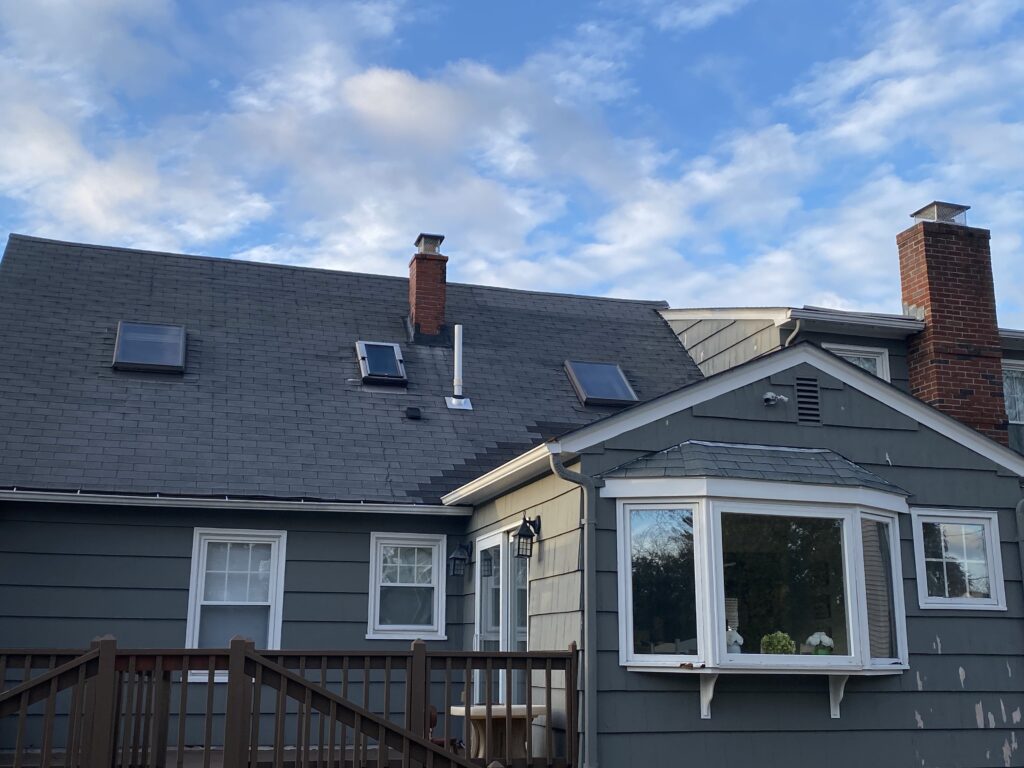
Before we quote anything, we get on the roof. That means checking the membrane for splits, blisters, and open seams, checking every drain, scupper, and roof penetration for standing water or failed flashing, and pulling back a section near any suspect area to see what the deck underneath looks like. On a commercial building, we also want to know what’s above the ceiling on the inside, because staining or soft spots on interior tile tell us where water has already been moving, sometimes well away from where it’s actually getting in.
We’ll tell you plainly if a section can be patched and monitored versus if the whole membrane is at the point where patching is just delaying a full replacement. A property manager doesn’t need a sales pitch. You need to know what’s actually happening on your roof and what your real options are, in writing, before you decide anything.
What the Job Involves
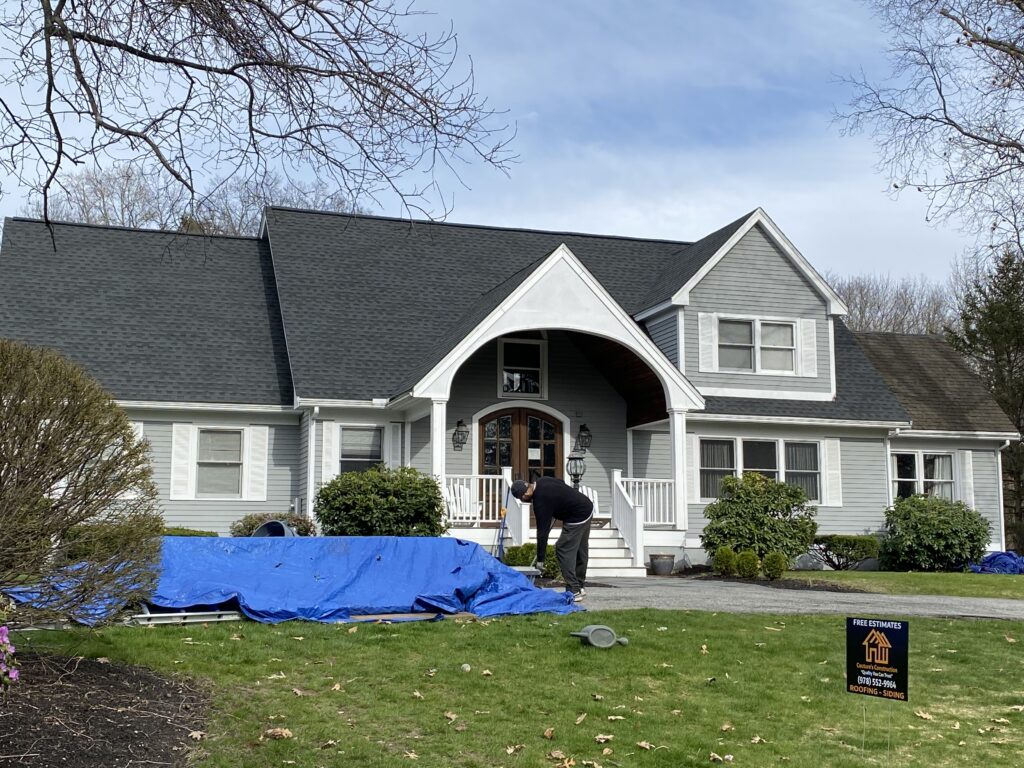
Most commercial low-slope jobs in Dracut start with removing the failed membrane, or in some cases overlaying it if the existing roof and insulation are sound enough to build on top of, which we’ll only recommend if it genuinely makes sense for that building. From there it’s checking and repairing the deck, installing new insulation board where needed for drainage taper, then setting the new membrane, whether that’s EPDM sheets adhered or mechanically fastened, or TPO heat-welded at the seams. Every penetration, drain, and edge gets flashed and sealed as part of the install, not as an afterthought.
The part that matters most for a business owner is phasing. We plan the work around your operating hours wherever the building allows it, sectioning the roof so you’re not shut down and keeping foot traffic areas and loading docks clear. We’ll walk through the sequence with you before we start so there are no surprises about access or noise during business hours.
What It Costs
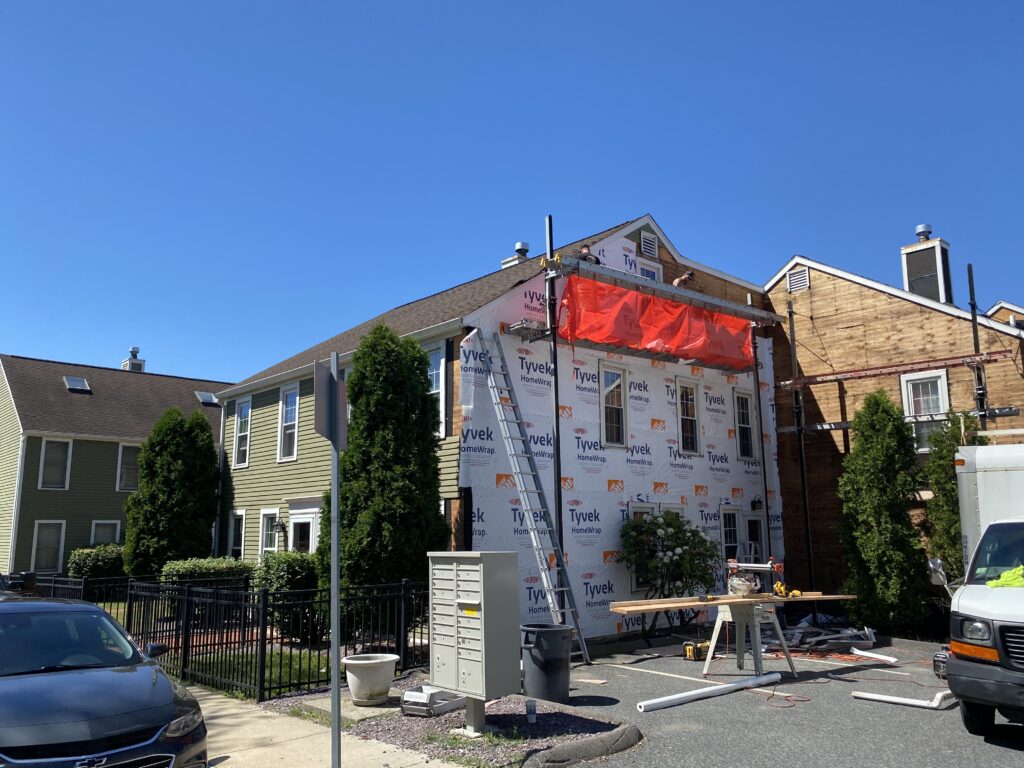
Commercial low-slope roofing in Dracut generally runs between {PRICE_LOW} and {PRICE_HIGH}, and the spread is wide because commercial jobs vary more than residential ones. Total roof area is the biggest driver, followed by how many layers of old roofing have to come off, how much of the deck needs repair once we open it up, and how complicated the roof is with rooftop units, drains, and multiple pitch changes. Access matters too. A single-story strip retail roof with a straightforward loading area costs less to work on than a roof over an occupied building with limited staging space. We’ll give you a real number after the assessment, not a phone estimate.
How Long It Takes
A straightforward EPDM or TPO re-roof on a mid-size Dracut commercial building typically takes a few days to just over a week, weather depending. Larger roofs, roofs with significant deck repair, or jobs phased in sections to keep a business open will run longer. We’ll give you a real schedule once we know the scope, and we’ll tell you up front if weather is likely to push the timeline, rather than promising a date we can’t hold to.
Do you work on occupied commercial buildings?
Yes. Most of our commercial roofing work in Dracut happens on buildings that stay open during the job. We phase the work, section the roof, and keep access clear around loading docks and entrances so your business keeps running.
How do I know if my flat roof needs full replacement or just a repair?
It depends on the membrane condition, how much of the deck is affected, and how many times the roof has already been patched. We check all three before recommending anything, and we'll tell you honestly if a repair is the right call rather than pushing a full replacement you don't need yet.
What's the difference between EPDM and TPO?
EPDM is a rubber membrane, durable and cost-effective for straightforward flat roofs. TPO is heat-welded at the seams and reflects more heat, which helps with cooling costs on buildings with a lot of exposed roof area. We'll recommend based on your building, not a default answer.
Can you match a repair to my existing roof system?
In most cases, yes, if the existing membrane is in good enough condition overall to justify a repair rather than replacement. We'll check the material and condition on-site before quoting.
Do you handle roof drains and ponding water issues?
Get an Estimate
If you manage or own a commercial building in Dracut and you’ve got a flat or low-slope roof that’s ponding water, past its warranty, or just due for an honest look, call Couture’s Construction at {PHONE}. We’ll come out, get on the roof, and tell you what’s actually going on before we talk about numbers.